Aunt Bessie and the Cracker Frame
On ambition, fruit stickers, and the things that turn out to matter.
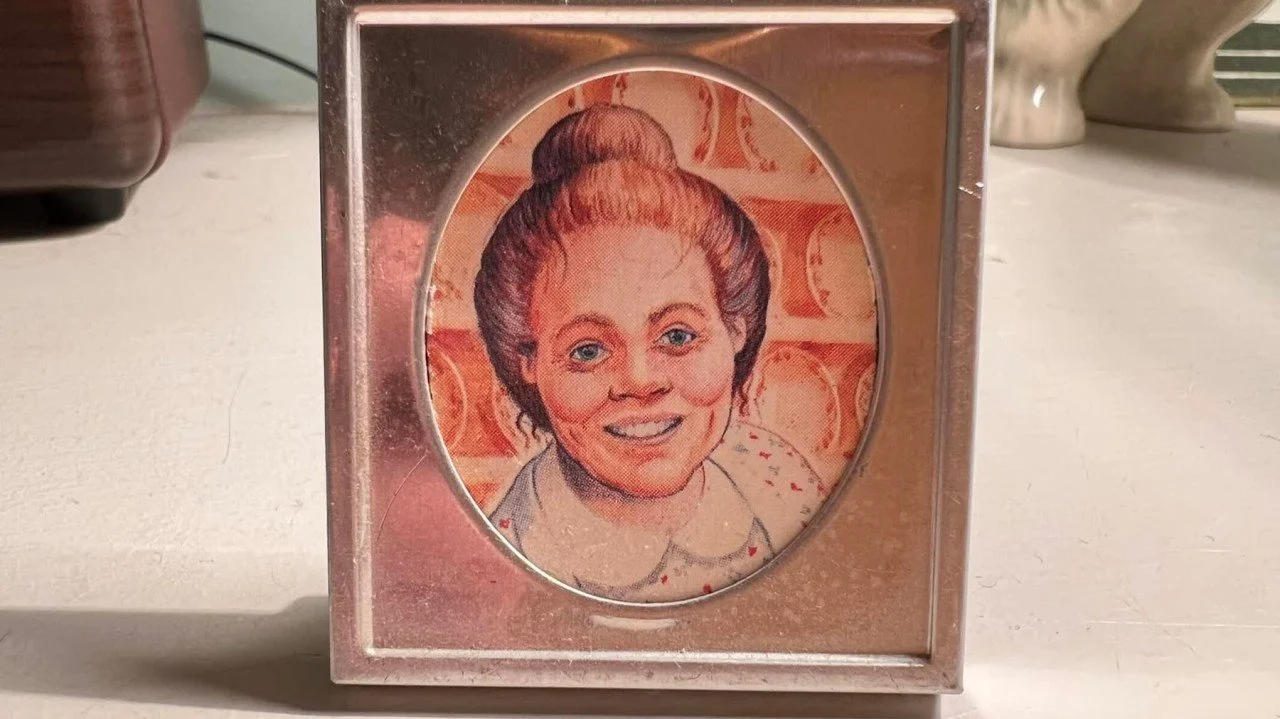
Aunt Bessie of Yorkshire Pudding Fame.
For a brief period between university and my first ‘proper’ job, I moved back home with mum and dad. I was in that odd in-between stage where you are technically an adult, but back in your childhood bedroom, confronted with evidence that life hasn’t quite begun. Blue tack scarring dark rectangles of wallpaper where posters once were.
n a fit of boredom, I wrote to Aunt Bessie. I wrote to her as though she were an elderly relative, thanking her for her contribution to family life. In particular, I thanked her for providing us with both meat and vegetarian Toad-in-the-Holes. My dad was a carnivore. My mum and I were herbivores. Aunt Bessie, sensitive to this, ensured our freezer was stocked with something for everyone.
I asked Dad for a stamp, and he was happy to indulge me. I popped the letter in the post and forgot about it.
A few weeks later Aunt Bessie replied. The paper may have been adorned with the food company’s standard customer service letterhead, but the author was undoubtedly Bessie. She thanked me for my letter. She was delighted to hear of the part she had played in bringing the family together for mealtimes. She apologised for not sending a food parcel, but suggested we could exchange the enclosed vouchers at a local stockist. Dad found this very funny.
Dad could be funny, but he was a serious man. He cared deeply about words, about acting, about whether he had made enough of his abilities, about whether the things he made would ever be taken seriously. He wrote poetry, acted in local productions, attempted a novel. He wanted what most people who make things want: for somebody to say this matters.
I understand that because I want it too. I am ambitious. I want my films to be seen. I want people to read what I write. There is nothing particularly noble about pretending otherwise. If we spend years developing our craft, if we dedicate months to making something, of course some part of us hopes it might last.
As a child in Hastings, I loved the boating pond. There were pedalos in the shape of swans, which needed an adult, and smaller ones that a solo child could captain. Each boat had a number. When your time was up, your number was hooked to a board. Depending on the weather, the season, and how distracted the teenage attendants were by each other, a session could last a few minutes or more than half an hour. You never knew when your number would be called.
My dad died of cancer when he was 63. At the time it didn’t seem that young; it’s starting to feel uncomfortably close to my age now.
For years, my dad stuck little fruit labels onto one of the kitchen cupboards. Apples. Bananas. Oranges. Pears. A growing collage of supermarket produce stickers. His own pop art. Dad took pleasure in his fruit-sticker cupboard, and he was frustrated that his writing never received the recognition he wanted. One does not cancel out the other. The things we make seriously matter, and so do the ridiculous things we make without thinking they matter at all. A film might disappear, a poem might be forgotten. A brief moment of shared silliness can be remembered for years.
Dad found a picture of Aunt Bessie, cut it from the packaging, placed it in the little cracker frame, and left it in my bedroom. He must have seen the frame and remembered the letter. Or seen Aunt Bessie’s face and thought of me.
I don’t keep many mementoes of my dad. I have no carefully curated archive of his life. But I have Aunt Bessie. A face cut from a cardboard packet, in a cheap silver frame from a Christmas cracker, put there by my dad because he thought it would make me laugh. It still does.